Which Driveway Surface Is Right for a Cornish Home?
The right driveway surface for a Cornish home is the one that deals with the water first and the weather second. Since 2008, planning permission is required in England for a new or replacement driveway of more than five square metres at the front of a house where the surface is impermeable and the run-off is not directed to a permeable area inside the property boundary, so permeability narrows the shortlist before appearance does. Resin bound and gravel drain through the surface. Permeable block paving drains through its joints. Tarmac, concrete and standard block paving do not, and need somewhere for the water to go. Exposure, salt and shade then decide how each one wears.
By Matt Richards, director · Last updated 22 September 2026
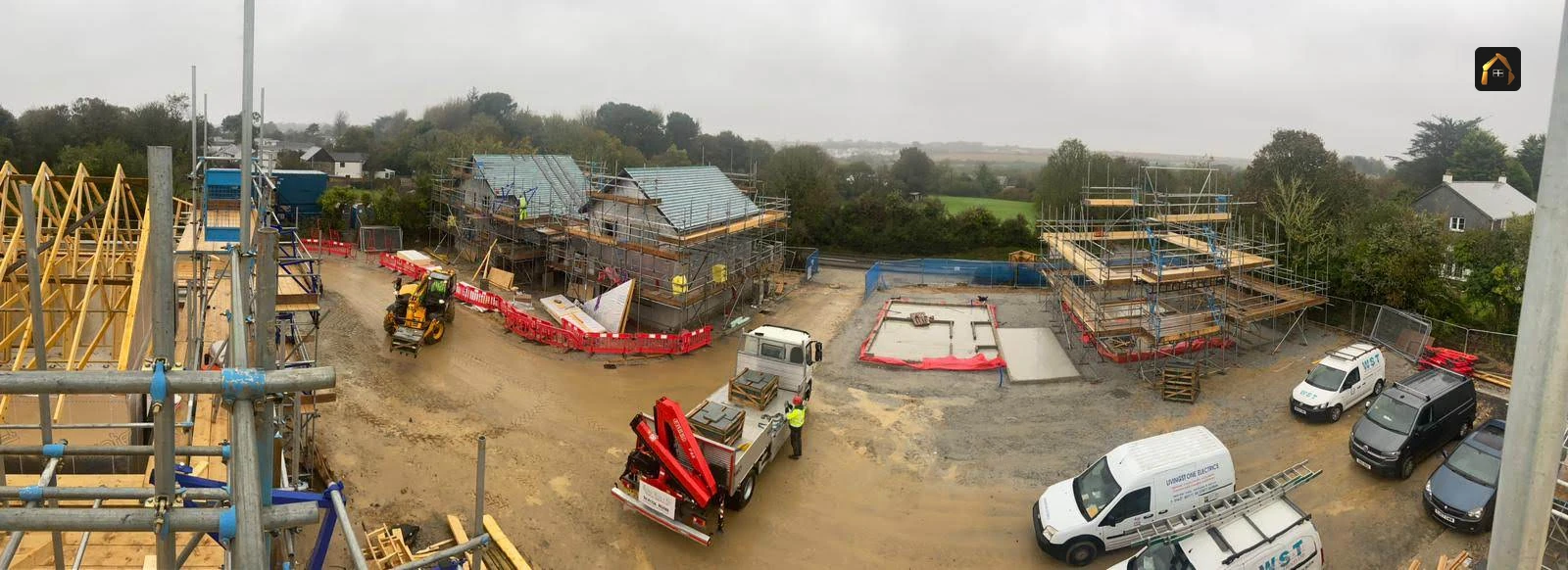
Permeability First: The Planning Rule That Narrows the Shortlist
A front driveway is a drainage decision before it is a design one, and English planning law says so. When permitted development rights changed in October 2008, the Government published guidance on the permeable surfacing of front gardens: permission is required for a new or replacement driveway over five square metres at the front of a house where the surfacing is impermeable and the water is not taken to a permeable area within the boundary. Use a permeable surface, or send the run-off inside the boundary, and the work normally stays within permitted development.
Building Regulations Part H sets the same priority for rainwater: surface water should soak into the ground where the ground will take it, and only go to a watercourse or a sewer where it will not. A permeable driveway is the domestic end of SuDS, sustainable drainage, the principle of holding water where it lands.
Permeable means the whole build-up, not the top layer. A permeable surface over a sealed base only moves the puddle out of sight.
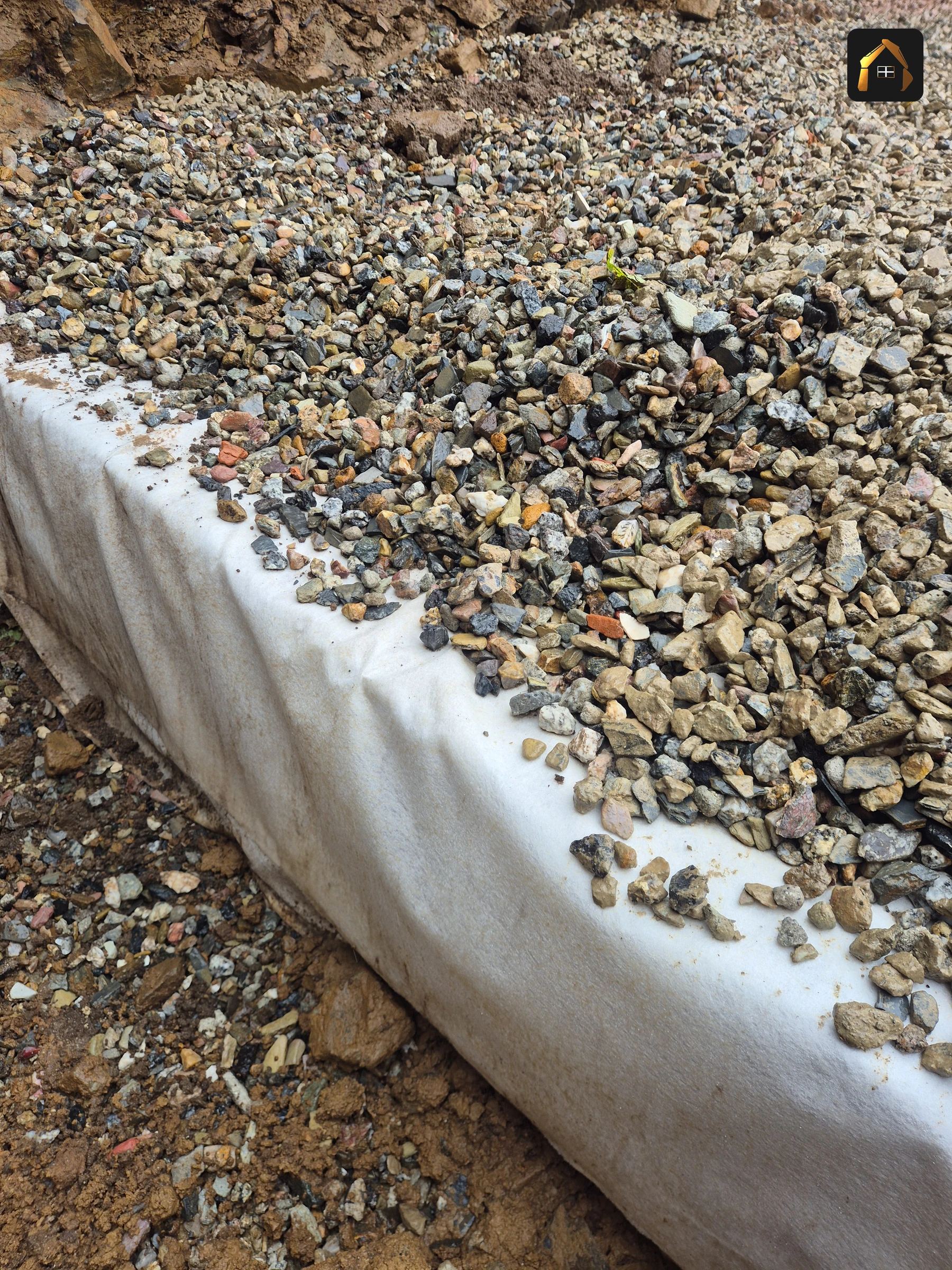
Resin Bound, Block Paving, Tarmac, Gravel and Concrete Compared
Aggregate mixed with a clear resin and trowelled over a base, curing as a permeable, seamless surface with no loose stone. Resin bonded is a different product: stone scattered over adhesive, textured to look loose, and not permeable.
Concrete or clay blocks laid on a bedding layer over a compacted sub-base. Standard blocks with sand joints shed water; permeable block paving uses wider, grit filled joints over an open graded sub-base so water passes through the pavement. Blocks lift and relay, which makes repairs and service access simple.
Bitumen bound aggregate rolled hot in one or two layers. Impermeable unless a porous asphalt is specified, quick over a large area and forgiving of irregular shapes. Its weak point is the edge, which ravels if it is not restrained.
Loose aggregate over a membrane, and the most permeable of the five. The simplest to put right, but it migrates downhill and towards the road unless restrained or held in a stabilising grid.
A cast, jointed slab, brushed, patterned or power floated. The most rigid of the five and the least forgiving of ground movement, so it needs movement joints, and it is impermeable unless a no fines mix is specified.
Why a Driveway Fails Underneath, Not on Top
Rutting, dips, ponding and spreading edges are not surface faults. They are the base showing through the finish, a winter or two later.
Four things below the surface decide how long any of the five lasts.
The dig continues until it reaches a formation that will carry a vehicle. Soft spots and made ground come out rather than get built over.
Graded crushed rock, MOT Type 1 in most domestic work, compacted in layers rather than in one lift. BS 7533, the British Standard series for pavements of clay, natural stone and concrete pavers, sets out the construction, and depth follows the ground and the load.
Every edge restrained and haunched in concrete, because a driveway comes apart from the outside in.
Levels set off the threshold, the garage and the boundary, so water runs deliberately to something that can take it: a soakaway, a border or the existing drainage.
Which Driveway Surface Do You Actually Need?
Match the surface to the situation rather than to a photograph.
Steps, walls and levels usually arrive with a driveway, and that is hard landscaping.
Gravel migrates downhill and off the edge, so a bound surface holds better on a fall: resin bound, tarmac, concrete or blocks.
A permeable surface over a permeable build-up, resin bound, permeable block paving or gravel, keeps the water on the plot and the job inside permitted development.
Block paving lifts and relays, so a future dig leaves no visible patch.
Gravel and stone setts sit most comfortably, and conservation area or listed building rules can limit what is allowed.
The decision is the base, not the top: load is carried by depth and compaction underneath, whatever is laid over it.
How We Quote the Groundworks Under a Driveway
We price the part of a driveway that decides how long it lasts: the excavation, what comes out of the ground, the sub-base build up, the edge restraint, the falls and the drainage. Matt visits the frontage, looks at levels, access and where the water can go, and puts the scope in writing with the conditions that would change it.
People choose the surface first and the base last. On a Cornish frontage the water has to be solved before anything is laid over it, or you are only putting a lid on the problem. Matt Richards, director
Driveway Questions People Ask
What is the difference between resin bound and resin bonded?+
Is block paving permeable?+
Which driveway surface needs the least maintenance in a coastal climate?+
How long does a driveway last?+
Do driveway rules change in a conservation area?+
Send the postcode, the rough area and a photo of the frontage, and Matt will look at what is under it.
Talk to Cornwall Civils & Construction about your project
Send the drawings, the postcode and the stage the site is at. The visit and the quote are free.
Call Matt Richards on 07958 102538 · Get a free quote online
14 The Strand, Newlyn, Penzance, TR18 5HN
Phone: 07958 102538
Email: info@cornwallcivilsandconstruction.co.uk
Hours: Mon to Fri 07:00 to 17:00 · Sat 08:00 to 12:00
Sunday: emergency call out only
Last updated: 22 September 2026